Leadership
After the Bad Case: Peer Support for Emergency Physicians
Why this matters
Many clinicians involved in an adverse event carry symptoms afterward, and few say their organization helped. What the second-victim evidence shows and how an ED builds a peer support pathway before it needs one.
Recommended next step
Pair this article with the free guide or course store if you want a more structured framework you can apply at the bedside or in leadership conversations.
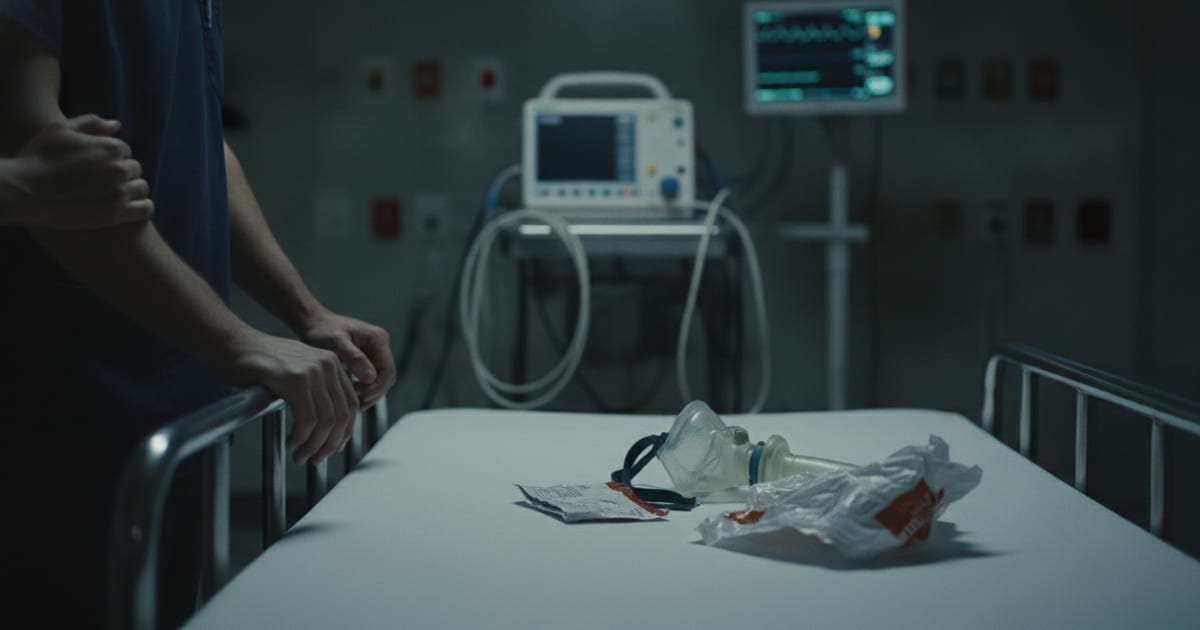
At 0340 a 52-year-old long-haul trucker comes back by ambulance in cardiac arrest. You saw him two days ago for chest pain and sent him home after a negative workup. The code runs 35 minutes and ends without a pulse. You speak with his wife, finish the note, and pick up the next chart, because 11 patients are still waiting. Nobody asks how you are doing, and the shift has four hours left.
The physician in that room is at real risk of harm, whether or not anyone made an error. That harm is common, it follows a predictable course, and a department can plan for it before the case happens instead of improvising after it.
What the evidence says happens to the clinician
Albert Wu named the problem in 2000 with the phrase "second victim" [1]. A European consensus group later defined it as any health care worker, directly or indirectly involved in an unanticipated adverse patient event, unintentional health care error, or patient injury, who is also negatively affected [2]. Patient-safety advocates, writing as family members of patients who died after medical errors, have asked the field to abandon the term [3]. This article uses it because the research literature does. It does not treat the clinician's harm as equal to the patient's.
The numbers are large. A systematic review of 32 research articles found second-victim prevalence after an adverse event ranging from 10.4% to 43.3% across studies [4]. A 2020 meta-analysis of 18 studies, covering 11,649 health care providers involved in adverse events, reported these pooled symptom rates [5]:
- Troubling memories: 81%
- Anxiety or concern: 76%
- Anger toward themselves: 75%
- Regret or remorse: 72%
- Fear of future errors: 56%
- Sleeping difficulties: 35%
The confidence intervals were wide. For troubling memories, the interval ran from 46% to 95% [5]. These rates describe clinicians who already met the second-victim definition, not everyone involved in an adverse event.
A widely cited physician survey did not include emergency physicians. Waterman and colleagues surveyed 3,171 internal medicine, pediatric, family medicine, and surgical physicians in the United States and Canada [6]. After errors, 61% reported more anxiety about future errors, 44% loss of confidence, 42% sleeping difficulties, and 42% reduced job satisfaction. Only 10% agreed that their organizations supported them adequately in coping with error-related stress [6]. There is no reason to assume emergency physicians fare better, but specialty-specific US data are thin.
Recovery follows a predictable course
Scott and colleagues interviewed 31 second victims from different professional groups and described six stages [7]:
- Chaos and accident response
- Intrusive reflections
- Restoring personal integrity
- Enduring the inquisition
- Obtaining emotional first aid
- Moving on
Symptoms did not differ by sex or professional group in that sample. The authors concluded that the trajectory is largely predictable, so a program can screen people right after an event and send support early [7]. Several participants said that later work on improvement or patient safety helped them enjoy their work again [7].
For an ED, stages one and two often happen on the same shift as the event. The "inquisition" stage, which includes case review, risk management, and morbidity and mortality conference, can run for weeks. Support that arrives only when the clinician asks for it arrives late.
Why it matters for the next patient
The link between distress and error runs in both directions. In a prospective study of 184 internal medicine residents at one center, a self-perceived medical error was followed by worse burnout scores and higher odds of a positive depression screen (odds ratio 3.29) [8]. Burnout and lower empathy, in turn, were associated with more self-perceived errors in the next three months. The authors called it a possible reciprocal cycle [8]. These were residents in one specialty at one institution, and the errors were self-reported, so the study does not prove that distress causes errors in emergency physicians. It does show a pattern that a department cannot afford to ignore.
The workforce signal comes from nurses. In a survey of 155 nurses, second-victim distress was associated with intention to leave and with absenteeism, and perceived organizational support fully mediated both relationships [9]. Leaders cannot change how hard a bad case hits. They can change how the organization responds.
Building a peer support pathway in the ED
Physicians say who they want to talk to. In a survey of 108 surgery, emergency medicine, and anesthesiology residents and attendings at one academic hospital, 79% had experienced a serious adverse patient event or a traumatic personal event in the prior year [10]. Physician colleagues were the preferred source of support for 88%, against 29% for the employee assistance program and 48% for mental health professionals. The barriers they named were lack of time (89%), difficult access (69%), concern about confidentiality (68%), harm to their career (68%), and stigma (62%) [10].
Many programs use the three-tier model developed by the University of Missouri team [11, 12]. Tier one is emotional first aid inside the unit. Tier two is a trained peer supporter. Tier three is referral to professional counseling.
Real programs show that awareness limits use. The RISE program at Johns Hopkins received 119 calls involving about 500 people in its first 52 months; most callers were nurses, and only 4% of calls were about medical errors [13]. Low awareness was a barrier to hospital-wide expansion, and calls rose from about one to four per month over four years [13]. A physician and advanced practice provider program at NYU trained 107 peer supporters and received 70 referrals from 2023 into 2025. Patient death (37%) and emotional stress (39%) were among the most common reasons [14].
Practical steps for an ED. These are recommendations drawn from how these programs run, not interventions tested in trials:
- Write a trigger list: an unexpected death, a pediatric arrest, a failed airway, a return visit with a bad outcome, and any case sent to formal review. Make outreach automatic for these events.
- Put activation with the charge nurse and the attending on duty. The clinician in the middle of the event should not have to ask.
- Make first contact during the same shift or the next one.
- Keep support and event review separate, with different people and different conversations.
- Before launch, ask risk management and counsel what your state's law protects. Do not let peer supporters promise confidentiality the law does not give.
- Train supporters to recognize when to refer to professional care.
What peer support does not fix
A 2025 systematic review of 15 intervention studies found that peer support programs, often built on the three-tier model, gave consistent short-term benefit, such as less emotional distress and less isolation [12]. Evidence for long-term effects on resilience, burnout, and retention was mixed and generally of low certainty [12]. Most studies were of moderate quality and few used a standard outcome measure. One program in the review found no change in burnout or quality of life over seven months [12].
Peer support is a first step. It does not replace professional mental health care, time away from clinical work when a clinician needs it, or a repair of the system failure that led to the event.
For more on the stress load emergency physicians already carry, see imposter syndrome in emergency medicine and AI and physician burnout.
Key Takeaways
- A meta-analysis of 18 studies gave pooled estimates of 81% (95% CI 46-95) for troubling memories and 56% (34-75) for fear of future errors among second victims.
- Only 10% of 3,171 surveyed physicians said their organization supported them adequately after errors.
- 88% of surveyed surgery, EM, and anesthesia physicians preferred a physician colleague for support, against 29% for the employee assistance program.
- Peer support shows short-term benefit; long-term effects on burnout and retention are low-certainty. Build a referral path to professional care into the program.
FAQ
What is second victim syndrome in emergency medicine?
It is the emotional and professional harm a clinician experiences after involvement in an unexpected adverse patient event, error, or injury [2]. It is a descriptive term, not a psychiatric diagnosis. Common symptoms include troubling memories, anxiety, self-blame, fear of future errors, and poor sleep [5].
How long does it take a physician to recover after a medical error?
No study gives a fixed timeline. Scott and colleagues described six stages, from the first chaotic response to moving on, and found that the course was largely predictable [7]. Case review and legal processes can extend the middle stages for weeks or longer.
Are peer support conversations confidential?
It depends on state law and on how the program is set up. Ask risk management and counsel before launch, and tell peer supporters what they can and cannot promise. Keep support conversations separate from the event review.
Dr. Chet's Take
I have practiced emergency medicine for more than 25 years at a Level I academic trauma center, and I also serve as a HEMS and critical care transport medical director. This article gets the main point right. The harm to the physician after a bad case is common and predictable, and it touches the next patient as well as the physician. Emergency medicine trains us to move to the next bed. That habit saves lives during a shift and costs us after one. The article is also honest about the limits of the evidence, and a skeptical medical staff will trust a program more when its leaders say those limits out loud. The argument holds: a department with a plan before the bad case will do better than one that improvises after it.
That being said, the program design here assumes everyone involved works under one roof. In my world they often do not. A flight crew hands off a patient and can be back in the air within the hour. As a TelEmergency medical director, I think about the physician who guides a small rural team through a resuscitation on a video link, and then the camera turns off. That hospital's peer support roster does not know the remote physician was there, and the physician's own group may never hear about the case. The honest answer is that I do not know of good data on how these events affect transport crews or telehealth physicians. My view is that they are the people most likely to be missed, because most trigger lists fire on events inside the building.
If you are leading an emergency department, write the trigger list this month and give activation to the charge nurse and the attending on duty. Then extend it past your walls. Add the transport crew that brought the patient in and the telehealth physician who consulted, and agree with their programs on who makes the call. Put a name and a phone number in writing, so the person on duty at three in the morning does not have to work it out. If you are the attending, you will be tier one more often than any trained supporter. Ask the question before the end of the shift, and ask it again a week later. The first conversation after a bad case belongs to the department, and it should happen before the physician drives home.
— Chester Shermer, MD, FACEP | Emergency Medicine, 25+ Years Clinical Experience | State Surgeon
Continue Your Training
If you're an emergency physician (or any clinician treating patients daily) trying to understand how AI will actually impact your clinical practice — not just the hype — I put together a free practical guide. You can download the AI in EM Survival Guide here.
Browse All Courses at Global MedOps Command
Relevant Reading on Global MedOps Command:
How to Avoid Becoming an AI Casualty — Dr. Shermer's guide to navigating AI tools in clinical and operational settings without compromising judgment or patient outcomes.
Emergency Department Efficiency Playbook — Practical systems for throughput, triage optimization, and operational efficiency.
Read more from Dr. Shermer on Medium
Connect with Dr. Shermer: LinkedIn — Chester "Chet" Shermer, MD, FACEP.
References
- Wu AW. Medical error: the second victim. The doctor who makes the mistake needs help too. BMJ. 2000;320(7237):726-727. PubMed 10720336
- Vanhaecht K, Seys D, Russotto S, et al. An Evidence and Consensus-Based Definition of Second Victim: A Strategic Topic in Healthcare Quality, Patient Safety, Person-Centeredness and Human Resource Management. Int J Environ Res Public Health. 2022;19(24):16869. PubMed 36554750
- Clarkson MD, Haskell H, Hemmelgarn C, et al. Abandon the term "second victim". BMJ. 2019;364:l1233. PubMed 30917966
- Seys D, Wu AW, Van Gerven E, et al. Health care professionals as second victims after adverse events: a systematic review. Eval Health Prof. 2013;36(2):135-162. PubMed 22976126
- Busch IM, Moretti F, Purgato M, et al. Psychological and Psychosomatic Symptoms of Second Victims of Adverse Events: a Systematic Review and Meta-Analysis. J Patient Saf. 2020;16(2):e61-e74. PubMed 30921046
- Waterman AD, Garbutt J, Hazel E, et al. The emotional impact of medical errors on practicing physicians in the United States and Canada. Jt Comm J Qual Patient Saf. 2007;33(8):467-476. PubMed 17724943
- Scott SD, Hirschinger LE, Cox KR, et al. The natural history of recovery for the healthcare provider "second victim" after adverse patient events. Qual Saf Health Care. 2009;18(5):325-330. PubMed 19812092
- West CP, Huschka MM, Novotny PJ, et al. Association of perceived medical errors with resident distress and empathy: a prospective longitudinal study. JAMA. 2006;296(9):1071-1078. PubMed 16954486
- Burlison JD, Quillivan RR, Scott SD, et al. The Effects of the Second Victim Phenomenon on Work-Related Outcomes: Connecting Self-Reported Caregiver Distress to Turnover Intentions and Absenteeism. J Patient Saf. 2021;17(3):195-199. PubMed 27811593
- Hu YY, Fix ML, Hevelone ND, et al. Physicians' needs in coping with emotional stressors: the case for peer support. Arch Surg. 2012;147(3):212-217. PubMed 22106247
- Scott SD, Hirschinger LE, Cox KR, et al. Caring for our own: deploying a systemwide second victim rapid response team. Jt Comm J Qual Patient Saf. 2010;36(5):233-240. PubMed 20480757
- Ong TSK, Goh CN, Tan EKYE, et al. Second Victim Syndrome Among Healthcare Professionals: A Systematic Review of Interventions and Outcomes. J Healthc Leadersh. 2025;17:225-239. PubMed 40485771
- Edrees H, Connors C, Paine L, et al. Implementing the RISE second victim support programme at the Johns Hopkins Hospital: a case study. BMJ Open. 2016;6(9):e011708. PubMed 27694486
- Groves KA, Lewis A, Hasson DC, et al. Implementation of an Institutional Physician and Advanced Practicing Provider Peer Support Program. J Patient Saf. Published online May 28, 2026. PubMed 42206613
Related simulation training: EM-Sim · Books by Dr. Shermer
Keep reading
Related reading and your next step.
Ready to go further? Move from this article into structured training, scenario-based rehearsal, and more physician-written guidance.
Course
Translate the article into a repeatable framework
Use the physician-led course when you want a structured framework for evaluating AI tools, protecting clinical judgment, and leading implementation decisions.
Simulation
Practice the decision path under pressure
Use EM-Sim when you want scenario-based repetition that turns article-level insight into physician-facing emergency-medicine reps.
Blog
Browse more articles
Explore the full blog for more on AI in emergency medicine, then head to the course and simulation pages when you want the structured next step.
Related Articles
AI in Emergency Medicine
AI Pulmonary Embolism Alerts on CTPA: What Gets Faster, What Doesn't
AI triage tools move PE-positive CT pulmonary angiograms up the radiologist's list. What the evidence shows about accuracy, wait times and downstream care, and how to act on the notice.
AI in Emergency Medicine
Machine-Learning Troponin Scores: What CoDE-ACS Can Rule Out
CoDE-ACS and MI3 turn troponin and clinical data into an MI probability. What the validation numbers show, where they beat the 0/1-hour pathway, and the assay catch.
AI in Emergency Medicine
Chatbots at the Bedside: What the Physician Trials Actually Show
GPT-4 did not improve physician diagnosis in one randomized trial, improved management reasoning in another, and stumbled on raw ED data. How to use a chatbot on shift.